

Open with the question you actually studied
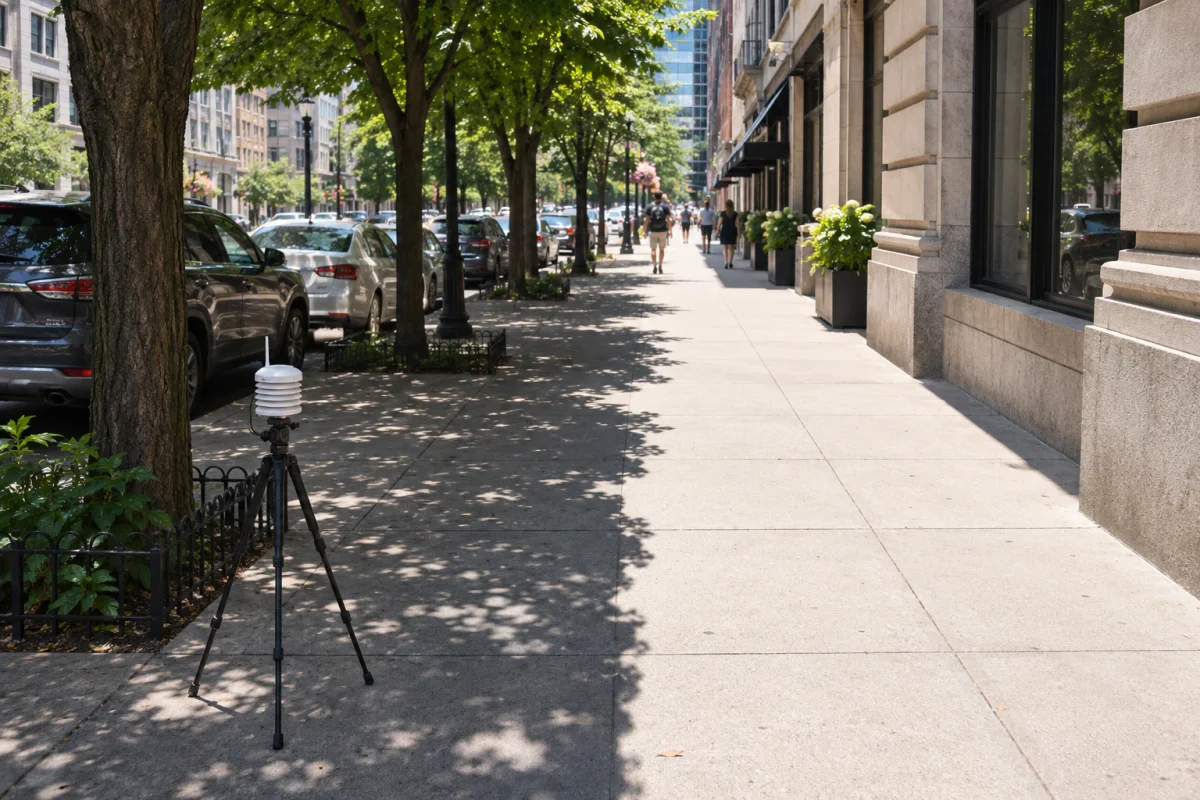
How does the air temperature change between shade and sun on the same block? That question gives a reader an immediate way into Noa’s field study. The reading pairs, units and places belong close to the result.
Give methods their own door
A collaborator may want the protocol before the chart. Noa’s methods direction opens with how she sets up matched points, swaps sensors and records changing conditions. Her field-log direction instead gives the observation that explains why one pair needs to be repeated.
Keep the limit beside the finding
Separate what the study observed from what a reader might infer. If a shadow moved or a reading needs to be repeated, write that beside the comparison. Let readers follow the material into a paper, protocol or appropriately shared data when you have one.
Sources accompany the advice they support. The cited institutions do not endorse Eigenstory.
Suggest a correctionSee the work in a website
Explore Noa’s research websitesAn Eigenstory demonstration with three authored website designs.