Noa Sato’s field journal
What the street made me write down.
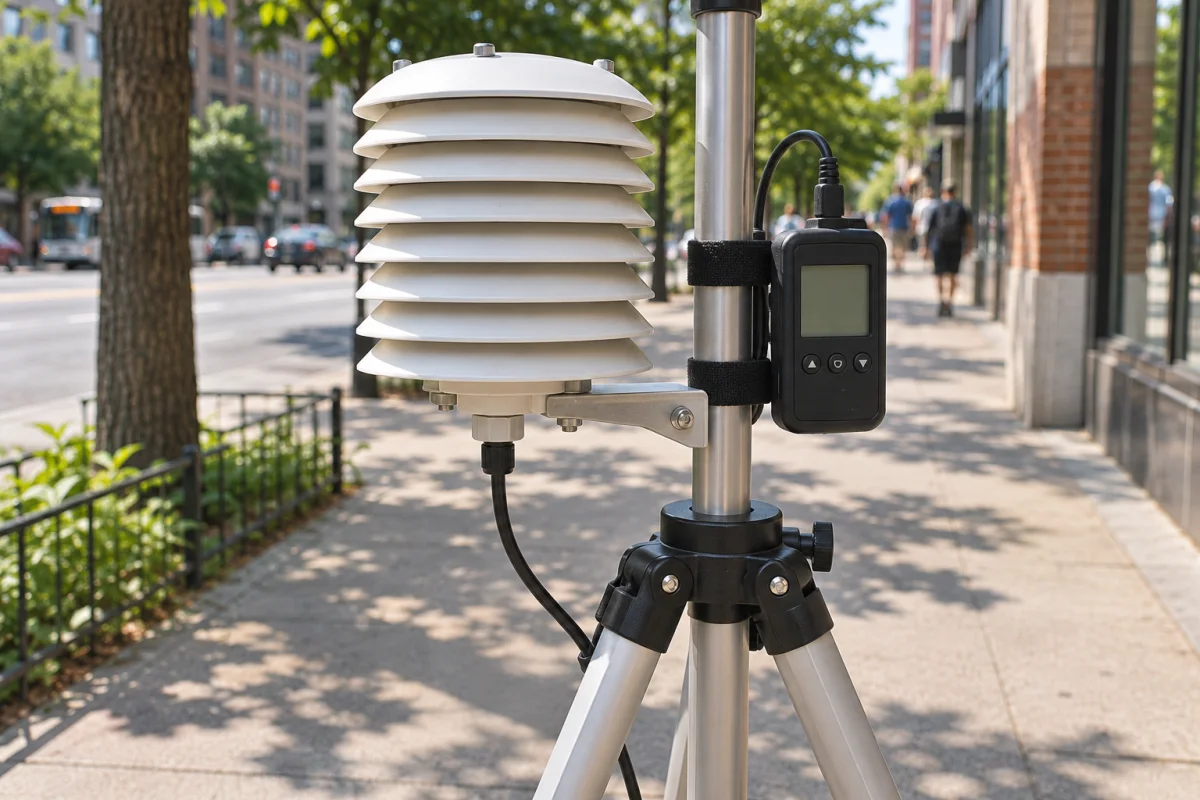
The readings are a line in a table. The shadow that moved, the sensor I swapped and the awning that stayed put are how I make sense of that line.
Read the field logThree mornings on foot.
- August 6
Move the sensor before you move the claim.
At Cedar Street I swapped the two sensors halfway through the session. I wanted to see whether the difference followed the location or the kit. I logged the swap in both rows of the table.
- August 13
An awning makes a useful comparison.
Market Lane has a long stretch of shade under a fixed awning. I compared it with exposed pavement nearby, with two measurements taken at the same time.
- August 20
The shadow didn’t stay put.
At Depot Square, a patch of sun reached the shaded sensor before the session ended. I kept the note with the pair so a reader can see why that comparison needs a repeat visit.
About Noa
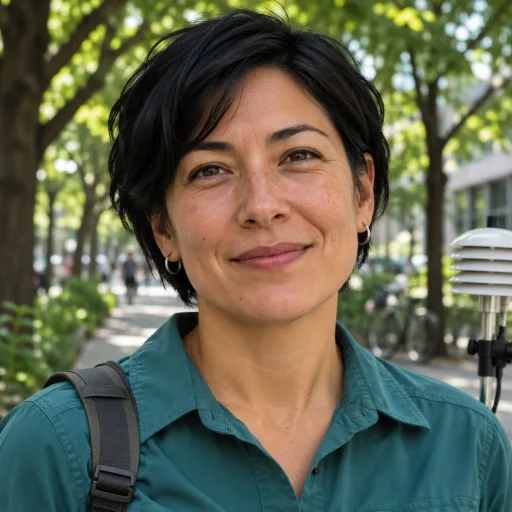
I study the conditions a pedestrian actually walks through. My work is for planners and research teams who need to see the reading, the place where it was taken, and the uncertainty that comes with it.
Collaborate on a field study.
I’m interested in working with people who know how their streets are used. A good first conversation starts with one route, who walks it and the decision your team is trying to make.